Twenty Minutes That Protect Six Figures: A Buyer's Guide to the Final Walkthrough
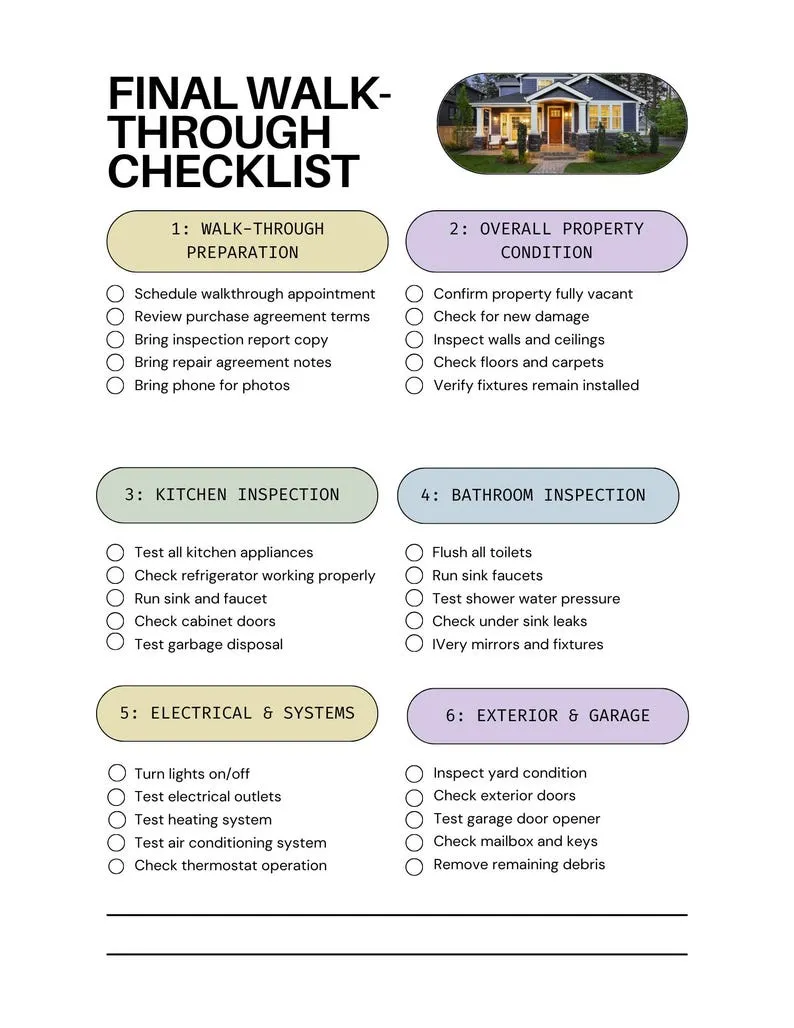
Photo: homebuyer final walkthrough inspecting house keys closing, via i.etsystatic.com
The Most Skipped Inspection in Real Estate
By the time a buyer reaches the final walkthrough, the heavy lifting feels done. The offer was accepted, the inspection came and went, the loan cleared underwriting, and the closing appointment is on the calendar. It's precisely this fatigue that makes the walkthrough dangerous. In our experience at Saryak Realty, the buyers who catch real problems are the ones who treat those twenty minutes with the same seriousness they gave the inspection itself.
The walkthrough is not a second inspection. Its purpose is narrower: to confirm the property is in the same condition it was when you agreed to buy it, and that the seller completed whatever repairs or concessions were negotiated. Think of it as a verification pass, not a discovery mission.
What You're Actually Verifying
A disciplined walkthrough covers three categories: negotiated repairs, condition of the property, and contractual inclusions.
Negotiated repairs. Bring a copy of the repair addendum and every invoice the seller provided. If the seller agreed to replace a water heater, confirm the unit is installed, permitted where required, and functioning — not sitting in the garage with a receipt taped to it. We've seen sellers complete repairs the week of closing with work that wouldn't have survived a Sunday handyman's review.
Condition of the property. Walk the home as it was during your inspection. Look for damage caused by the seller's move-out: gouged hardwood floors from a rented dolly, a door frame cracked by a sofa, holes in drywall where televisions once hung. Movers cause damage, and closing day is your only realistic chance to have it addressed.
Contractual inclusions. If the contract says the refrigerator, window treatments, or the mounted smart TV convey, verify they're still there. In a hot market, it's not unheard of for a seller to swap in a cheaper appliance or take the dining room chandelier as a 'family heirloom' — even when the contract says otherwise.
The Checklist
Print this, or save it to your phone:
- Run every faucet; check for leaks under sinks and water pressure at all taps
- Flush every toilet; watch for continuous running or slow drains
- Test the dishwasher, oven, range, garbage disposal, microwave, washer, and dryer through at least one full cycle or function
- Turn on the HVAC in both heating and cooling modes
- Flip every light switch; test garage door openers and doorbells
- Open and close every window and exterior door
- Check ceilings, walls, and floors for new stains, cracks, or damage
- Confirm all negotiated repairs are complete, with permits and invoices in hand
- Verify all inclusions in the contract remain on the property
- Test smoke and carbon monoxide detectors
- Confirm the seller's belongings are fully removed, including the attic, crawlspace, and shed
- Photograph anything questionable, timestamped
When Something Is Wrong
Finding a problem at the walkthrough is not a catastrophe — but handling it poorly can be. You have three practical paths:
Delay the closing. If the issue is material, postponing a day or two is often the cleanest option. Most sellers, faced with their own moving deadline, will resolve a problem quickly to keep the deal on schedule.
Negotiate a holdback. Your attorney or title company can hold a portion of the seller's proceeds in escrow until the repair is completed. A common figure is 150% of the estimated repair cost, providing cushion for overruns.
Accept a credit and move forward. For smaller items, a credit at closing may be simplest, provided you've priced the repair accurately rather than optimistically.
What you should never do is accept a verbal promise. 'I'll mail you a check' has a poor track record of arriving.
Walkthrough Finds That Saved Real Deals
A buyer we represented in the Midwest discovered at the walkthrough that the 'repaired' foundation crack had been covered with a fresh coat of paint — the crack itself untouched. A same-day holdback of $8,500, verified against a contractor's bid, resolved it before closing.
Elsewhere, a couple arrived to find the seller's moving truck still half-loaded and a wall scraped from floor to ceiling where a piano had been dragged out. A two-day closing delay and a $1,200 credit later, they took possession of the home they'd actually contracted to buy.
Neither buyer was difficult. Both were simply thorough, with their agent present, their checklist in hand, and their contract in the car.
The Bottom Line
The final walkthrough occupies an awkward middle ground: too late for an inspection, too early for regret. It rewards buyers who show up prepared, unhurried, and willing to raise a hand when something looks off. Twenty minutes of diligence is cheap insurance on a six-figure purchase — and occasionally, it's the difference between the home you negotiated and the home you'd have inherited.