When the Number Comes Back Low: A Negotiator's Guide to the Appraisal Gap
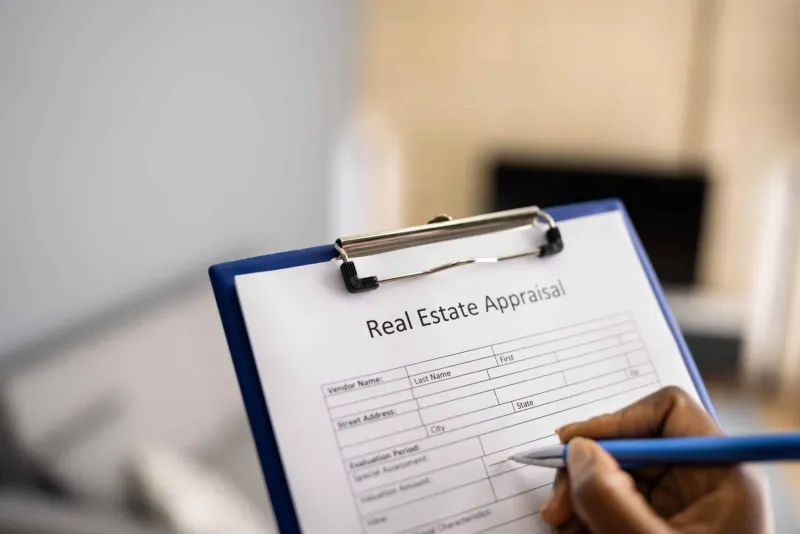
Photo: real estate appraisal documents on table with house keys and calculator, via blockappraisals.com
In the last 18 months, our transaction files at Saryak Realty show a pattern worth studying: roughly one in five contracts we've tracked encountered an appraisal that came in below the agreed purchase price. None of those deals had to die. Most didn't. The difference between a collapsed contract and a closed one usually came down to how the gap was framed — not as a crisis, but as a second negotiation with new information on the table.
What an Appraisal Gap Actually Is
An appraisal gap is the difference between the contract price and the appraiser's opinion of value. If you agreed to pay $485,000 and the appraisal returns at $470,000, you have a $15,000 gap. The lender will typically base the loan on the lower figure, which means someone has to decide what happens to that shortfall.
It's important to understand what the appraisal is not. It is not a verdict on the home's worth to you. It is not a market forecast. It is a backward-looking, rules-bound estimate built from comparable sales, adjusted for differences in condition, lot size, and timing. Appraisers in most US markets are working from sales that closed 60 to 90 days ago — in a market that moved faster than the paperwork, the number can lag reality.
That lag is exactly why a gap is negotiable rather than fatal.
Who Eats the Gap?
By default, the purchase contract governs. In most standard forms, if the appraisal supports the loan amount the buyer needs, the buyer must either bring additional cash to close or the parties renegotiate. The seller is under no obligation to reduce the price — though many do, because the alternative is re-listing in front of a new appraisal, a new buyer, and a new round of uncertainty.
The honest answer to "who eats it" is: it depends on leverage, and leverage depends on evidence. A seller with three backup offers holds different cards than a seller whose listing has gone quiet. A buyer who waived the appraisal contingency holds almost none — that buyer contractually promised to cover the gap, full stop.
Three Structures That Save the Deal
Across our recent files, gap resolutions clustered into three workable structures.
1. The Split. The most common outcome in our cases was division: buyer brings half the gap in cash, seller reduces the price by half. In one suburban file, a $12,000 gap on a $440,000 sale closed with $6,000 from each side. Neither party loved it. Both parties closed. That's the signature of a good split — it converts a zero-sum standoff into a shared cost everyone can live with.
2. The Escalation Clause Revisit. In competitive situations, buyers sometimes bid above where comparable sales support, using an escalation clause. When the appraisal exposes that the top of the escalation wasn't value-backed, a clean fix is to step the price down to the last defensible rung and pair it with a seller credit for repairs or closing costs. This preserves the headline price for the seller while lowering the buyer's actual cash-to-close — a structure lenders tend to accept readily.
3. The Reconsideration of Value. This is the most underused tool in the residential toolkit. If the appraiser missed comparable sales — a closed sale two blocks away, a pending contract, an overlooked basement finish — either agent can submit a Reconsideration of Value request to the lender with documented comps. In one of our files last spring, a reconsideration backed by three overlooked sales moved the appraisal up $18,000 and erased the gap entirely. It costs nothing but preparation, and it should always be the first move before anyone concedes a dollar.
Scripts That Keep the Deal Alive
How the conversation opens matters as much as the numbers. Here is language that has worked in practice.
For buyers, to the listing agent: "We're still committed to this house. The appraisal came in at X, and we can bring $Y to the table. We'd like to propose meeting in the middle on the remainder, and we can turn around an amendment today."
This works because it leads with commitment, states a concrete number, and makes saying yes easy. What doesn't work: leading with the appraisal as though it's the seller's problem. It isn't yet.
For sellers, to the buyer's agent: "We understand the appraisal number. We're willing to look at a reduction of $Z, provided we close on the original timeline. If that doesn't work, we're prepared to re-list, but we'd rather close with you."
The closing line matters. It signals optionality without hostility, and in our experience it moves more buyers off a hard position than any ultimatum.
On reconsideration, to the lender: Keep it clinical. Three to five comps, closed within 90 days, within a quarter-mile where possible, with a one-line explanation of why each was more comparable than what the appraiser used. Appraisers respond to documentation, not to adjectives.
The Pattern Worth Remembering
Look back through those 18 months of files and one theme repeats: the parties who treated the low appraisal as new data — rather than as a betrayal — kept their deals. The appraisal is a checkpoint, not a finish line. It gives both sides a shared, defensible number and a legitimate reason to reopen terms without anyone losing face.
Buyers, the practical takeaway is this: know your walk-away cash before you write the offer, and never waive an appraisal contingency unless the gap math genuinely works at your worst-case number. Sellers, the takeaway is symmetrical: a low appraisal is an invitation to prove your price, and the sellers who respond with comps and flexibility, rather than refusal, are the ones who end up at the closing table.
The gap is not the end of the negotiation. Done well, it's the beginning of the only one that ever really mattered — the one where both sides decide the deal is still worth closing.