Three Visits, One Verdict: A Buyer's Method for Reading a Neighborhood Before Committing
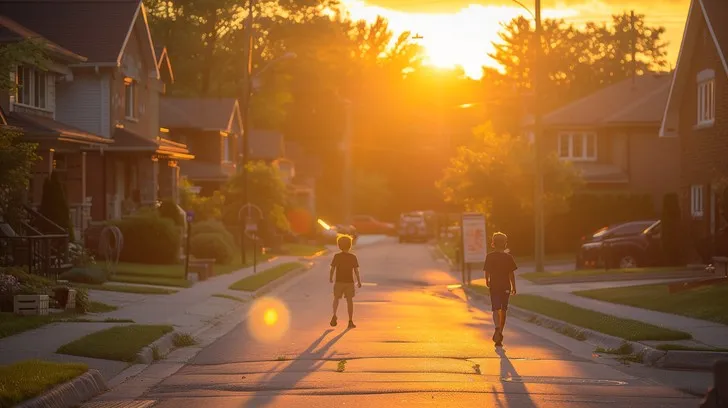
Photo: person walking suburban neighborhood street observing houses, via images.stockcake.com
Every experienced agent has watched it happen: a buyer walks through a beautifully staged home, falls in love, and signs a contract without ever understanding the world outside the front door. The house is a snapshot. The neighborhood is a film — and you cannot judge a film from a single frame.
At Saryak Realty, we counsel buyers to treat neighborhood evaluation as seriously as the home inspection. The difference is that no inspector will do this work for you. It requires your own eyes, at your own hours, on your own terms. The good news: it takes less time than you think. Fifteen minutes, three times, at three deliberately different moments, will tell you more than any online review or demographic dashboard.
Visit One: The Weekday Morning
Arrive between 7:00 and 8:30 a.m. on a regular Tuesday or Wednesday. This is when a neighborhood reveals its rhythm. Watch how traffic moves — is the main road a parking lot, and does that congestion spill onto residential cut-through streets? Note how drivers behave at intersections; aggressive speeding through residential blocks is a habit, not an accident.
Look at the people. Are folks walking dogs, jogging, waiting at bus stops? Morning sidewalk life suggests walkability and a resident population that is present, not just parked overnight. Pull over safely, step out, and listen. Highway hum, flight paths, and distant industrial noise all become obvious in the quiet of early morning — and all are easy to miss during a midday showing.
Visit Two: School Pickup, Roughly 3:00 P.M.
If the area has families, the afternoon school run is its most honest hour. Observe whether children walk or bike — a signal of perceived safety and connectivity. Notice crossing guards, sidewalk condition, and whether parents linger and chat. Social cohesion is invisible in statistics, but unmistakable at 3:15 on a school day.
This is also the time to assess parking realistically. That charming street may become a wall of parked cars twice daily. If you work from home or return mid-afternoon, you need to know whether a parking spot is a given or a negotiation.
Visit Three: Friday Night, After Dark
The third visit is the one most buyers skip, and the one that matters most. Between 8:00 and 10:00 p.m. on a Friday, a neighborhood shows its true character. Are streets reasonably lit? Are people out walking to restaurants, sitting on porches, gathering somewhere central? Or is the area silent in a way that feels neglected rather than peaceful?
There is a difference between quiet and deserted. A neighborhood that empties completely at night may lack the commercial anchors — coffee shops, hardware stores, a reliable diner — that sustain property values. Conversely, excessive noise or loitering that makes you uncomfortable as a visitor will not improve once you hold the deed.
The Checklist: What to Record Each Time
Bring a notes app or a small notebook and log the same items on all three visits:
- Traffic speed and volume on the specific block, not just the arterial road
- Yard and facade maintenance — consistent upkeep across multiple homes signals collective pride; two or three neglected properties on a block is normal, a pattern is not
- Where people actually gather — a visible gathering place, whether a park bench, a coffee shop, or a church steps, indicates community infrastructure
- Noise profile — note it in the morning, afternoon, and at night
- Lighting and sightlines after dark
- Commercial activity within a ten-minute walk: groceries, pharmacies, basic services
Three data points per category, gathered across three visits, form a pattern no listing description can manufacture.
What the Data Cannot Tell You
Median income, school ratings, and appreciation forecasts are useful context, but they describe a zip code, not a street. Real estate remains hyperlocal; the difference between the two sides of the same subdivision can be the difference between a property that sells in a weekend and one that lingers. National portals aggregate. Only you can observe.
We also encourage buyers to introduce themselves — briefly and politely — to a neighbor or two during one of the visits. Most residents are happy to share honest perspective, and how they respond tells you something no checklist captures.
The Cost of Skipping It
A home is the largest purchase most Americans will ever make, and regret at that scale is expensive. Buyers who discover after closing that the quiet street becomes a speedway at rush hour, or that the nearby gathering spot they assumed was a café is actually a late-night bar, face a choice between living with the mismatch or paying the transaction costs of an early exit.
Fifteen minutes, three times. Less than an hour of your life, spent before you fall in love rather than after. In our experience, it is the highest-return hour a buyer will ever invest — and the discipline that separates a confident purchase from a hopeful one.