When the Office Moved Home: Three Neighborhood Types Winning the Hybrid Era
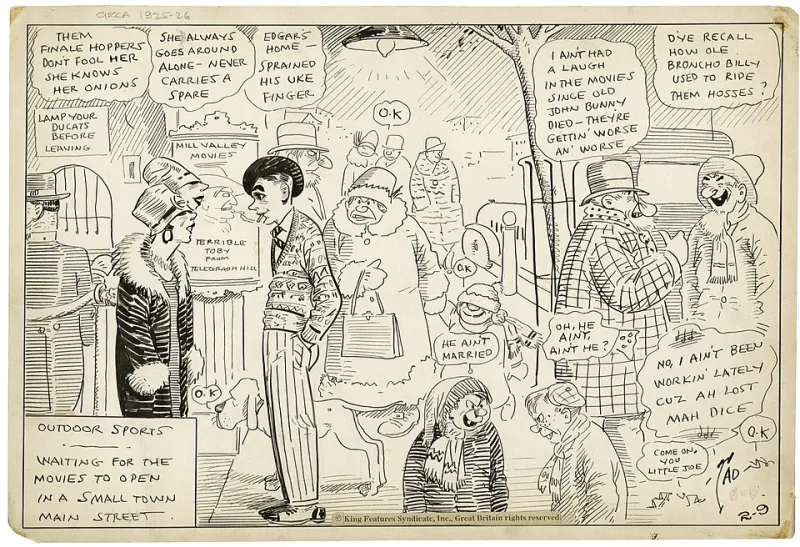
Photo: Tad Dorgan, Public domain, via Wikimedia Commons
For most of the last century, the commute was the organizing principle of American home buying. Price, school district, square footage — all of it was negotiated against the daily drive into the office. That assumption no longer holds. With a substantial share of white-collar workers now reporting to a workplace only two or three days a week, the calculus has shifted from how far to how well. At Saryak Realty, we've watched this play out across our local market, and the pattern is consistent enough to name: buyers are trading proximity for space, and they're concentrating in three distinct types of neighborhoods.
What Buyers Are Actually Paying For
The data behind the shift points to a handful of non-negotiables. A dedicated room that functions as a home office — with a door — now ranks among the top features buyers under fifty ask for. Extra square footage, once priced at a premium per square foot, is being valued more for what it enables: a desk in a corner, a workout area, room for a household that's home far more often.
Just as telling is what has lost value. Modest condos near dense employment cores, once the default first purchase for young professionals, have seen demand soften relative to single-family homes with flexible floor plans. The premium has migrated from location efficiency to livability.
Hotspot One: The Edge of the Commuter Shed
The first winner is the outer ring of traditional commuter territory — communities that sat just beyond the practical drive-to-downtown radius a decade ago. When a buyer only faces the highway twice a week, a fifty-minute commute becomes tolerable, and the price per square foot drops meaningfully at that boundary.
These areas tend to offer newer housing stock, larger lots, and, increasingly, the connectivity infrastructure that matters: reliable broadband is now a showing-day question, not an afterthought. Sellers in these communities should treat internet speed documentation the way they once treated school district data — prominently, and in writing.
Hotspot Two: Small-Town Main Streets
The second category is the walkable small town with a genuine center — a main street with a coffee shop, a hardware store, a farmers market. These towns historically struggled to attract younger buyers because the jobs were elsewhere. Hybrid work severed that dependency.
What sells here is not the house alone but the errand-free Saturday. Buyers are responding to a lifestyle bundle: a porch, a walkable downtown, and a community calendar. Sellers in these markets should resist over-renovating. Original character — front porches, woodwork, walkable proximity — is precisely the asset. A gut renovation that erases charm often erases value in this segment.
Hotspot Three: Lake and Mountain-Adjacent Communities
The third hotspot is the recreation-adjacent market — towns near lakes, ski areas, and state parks that were once purely second-home territory. With flexibility on where work happens, some buyers are converting the vacation purchase into a primary residence, stretching their housing dollar toward scenery.
These markets carry their own dynamics: pronounced seasonality in inventory, septic and well considerations in rural pockets, and insurance costs that vary sharply by terrain. Sellers here benefit from listing in the shoulder seasons when relocating buyers — not just vacationers — are actively searching.
Guidance for Sellers in These Markets
If your home sits in one of these demand pockets, the marketing playbook has changed. Lead with the flexible space: stage the spare room as an office, not a gym. Document connectivity. Emphasize the weekly rhythm of life in your community — the market, the trailhead, the short drive to the regional hospital. Today's buyer is not purchasing a commute; they are purchasing a week.
And for buyers weighing the trade-off: hybrid-era demand has already been priced into many of these neighborhoods. The discount at the edge of the map is real, but it is narrowing. Local guidance matters more than ever, because the premium varies street by street — something no national portal captures.
The map of desirable America is being redrawn one two-day-a-week commute at a time. The communities that understand why are the ones positioned to benefit.