Why the Algorithm Doesn't Know Your Street: The Hidden Cost of National Real Estate Portals
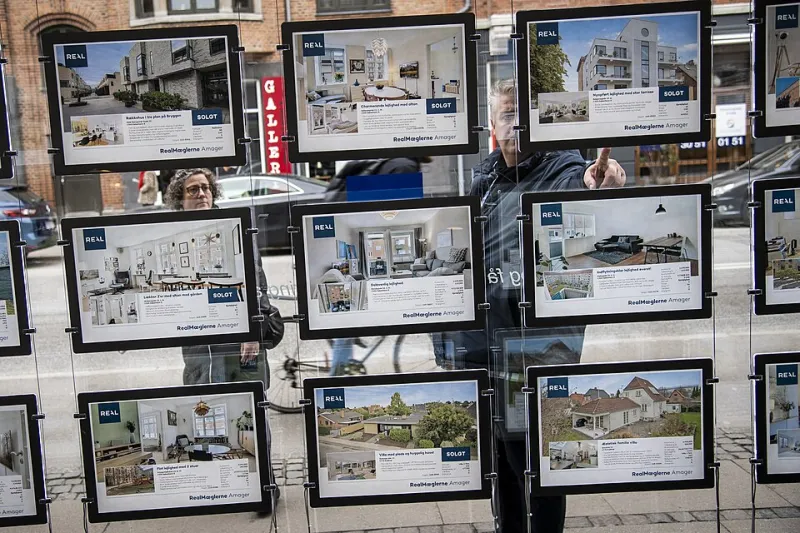
Photo: Jacob Ljørring, CC BY-SA 4.0, via Wikimedia Commons
The Promise of the Perfect Number
Type an address into any national real estate portal and within seconds you receive a valuation — precise, confident, and displayed to the dollar. It feels like knowledge. It is, more often, a guess wearing the costume of certainty.
Automated valuation models, or AVMs, are remarkable pieces of engineering. They digest millions of transactions and produce estimates that are broadly reasonable across entire metros. The trouble begins when you zoom in. Real estate is not traded in metros. It is traded in neighborhoods, on blocks, sometimes on one side of a street rather than the other. And that is precisely the resolution at which national algorithms go blind.
Where the Models Fall Short
School Boundaries Move. Algorithms Don't.
Few factors move a home's value faster than a school boundary redraw. When a district reassigns a subdivision from a struggling elementary to a high-performing one — or the reverse — the effect on prices can be immediate and significant. Portals do not track boundary shifts in real time. An agent who sits on the district's parent council hears about the proposal before it is finalized. We have watched comparable homes on opposite sides of a boundary line diverge by 8–12% in a single year. The model, averaging across the zip code, sees nothing.
Developments Announced Today Reshape Prices Tomorrow
A light-rail station plan. A distribution center. A mixed-use project with a grocery anchor. These announcements land in planning commission agendas months or years before they appear in any dataset an algorithm ingests. By the time the AVM reflects a new development, the buyers who priced it in early have already captured the appreciation. Local agents read those agendas because their clients' equity depends on it.
Street-Level Desirability Defies the Data
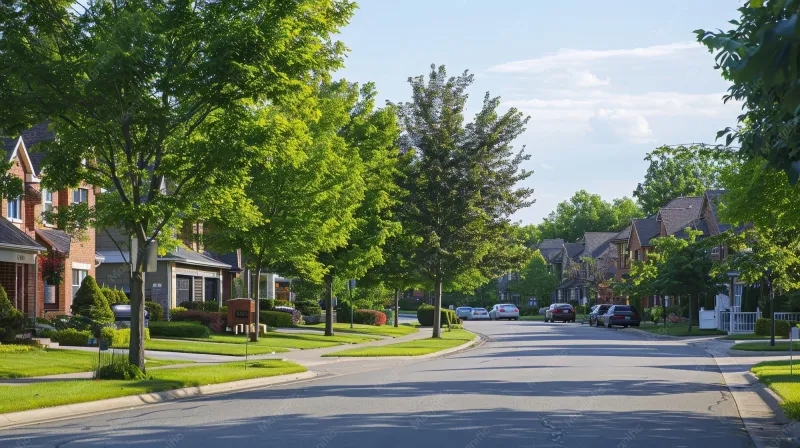
Two homes with identical square footage, beds, and baths can sit three blocks apart and command wildly different prices. One backs to a quiet greenbelt; the other faces a four-lane arterial. One is on the walk-to-coffee side of the neighborhood; the other is not. AVMs adjust for some of this crudely, but they cannot know that a particular cul-de-sac is where the block parties happen, or that a once-neglected stretch of commercial frontage just changed hands to a developer with a track record.
What This Costs You
Skeptics might shrug: so the estimate is a few percentage points off. But scale matters. On a $450,000 home, a 5% mispricing is $22,500. For a seller, an overreliance on portal estimates can mean overpricing, sitting on the market, and ultimately accepting less than a correctly priced home would have fetched. For a buyer, trusting the algorithm can mean losing a bidding war to someone who understood — through a local agent — that the listing was underpriced to generate traffic.
There is a subtler cost as well: misallocation of search time. Portals surface homes by filters and proximity, not by knowledge of which streets are improving and which are quietly declining. Buyers spend weekends touring houses an algorithm ranked highly, unaware that two streets away, the same budget buys more house in a better position.
The Case for Agents Who Live Where They Sell
None of this is an argument against technology. At Saryak Realty, we use the same data tools as anyone — and better ones than most. The difference is what happens after the model produces its estimate. Our agents stress-test it against what they know: which school rezonings are pending, which developers have filed plans, which blocks have turned in the last eighteen months. The algorithm is a starting point. Local judgment is the actual valuation.
This is also why we are skeptical of the trend toward fully remote transactions. An agent in another state, working from a dashboard, is subject to the same information gaps as the algorithm itself. Proximity is not a luxury in this business. It is the source of the information edge.
Trust Is Built at the Local Level
The real estate industry has spent a decade teaching consumers to trust numbers. We would rather earn trust a different way: by being right about the things numbers cannot see. When a national site tells you what a home is worth, ask what it knows about the school board, the planning commission, and the corner of Elm and Main. The honest answer is: nothing.
If you are buying or selling in 2025, use the portals for what they are good at — browsing, daydreaming, getting oriented. Then talk to someone who actually lives in the market. That conversation is where your real number lives.