Reading the Report: Separating Inspection Noise from Deal-Breaking Signal
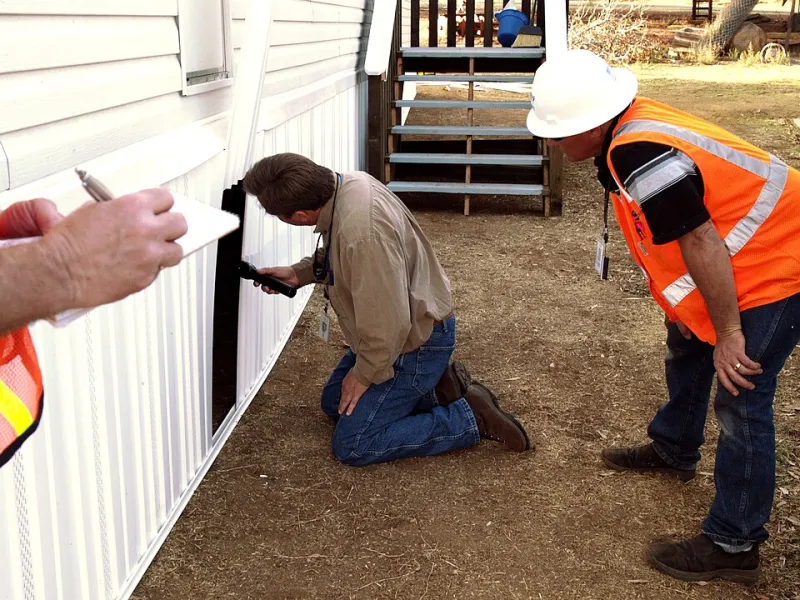
Photo: Amanda Bicknell, Public domain, via Wikimedia Commons
There is a moment, usually forty-eight hours after the inspection, when a buyer calls their agent in a state of quiet alarm. The report is forty pages long. It uses words like conducive and beyond serviceable life. The photographs are unflattering. And the buyer, who loved this house a week ago, is now wondering whether they've been about to purchase a money pit.
Having sat through hundreds of these conversations, I'll offer a contrarian view: the inspection report is not a verdict on the house. It is an inventory of its age. Learning to read it that way — calmly, in tiers — is one of the most valuable skills in a transaction, and the reason emotional discipline at this stage separates successful buyers from the ones who walk away from perfectly good homes.
The Three-Tier Triage
Every finding in an inspection report belongs in one of three buckets. First: routine maintenance and age-appropriate wear — a water heater at year twelve, caulk that has failed at a tub, a filter that hasn't been changed. This is the majority of any report, and none of it should move price.
Second: legitimate negotiating items — repairs with real but bounded costs. A failing dishwasher, a deck rail that's loose, a chimney that needs repointing. These are fair game for a credit request, and a reasonable seller will engage.
Third — and this is the short list — structural, safety, or systemic issues. This is where a deal can genuinely be in question, and where the buyer's response should be measured, not panicked.
The Findings That Sound Worse Than They Are
Consider the classics. Hairline foundation cracks: nearly every concrete foundation develops them as it cures and settles. Vertical hairlines, stable and narrow, are typically cosmetic. The concern arises with horizontal cracking, stair-step patterns in masonry, or cracks that widen over time — which is why a structural engineer's opinion, not an inspector's adjective, should drive any decision there.
Drainage and grading: water pooling against the foundation shows up in a majority of reports, and it sounds ominous. In practice, grading corrections, gutter extensions, and downspout adjustments are among the cheapest fixes in real estate. It's a negotiation item, frequently a small one.
Aging but functional systems: a twenty-year-old roof with years of life left, an original furnace that runs fine. Inspectors document age; they don't predict failure dates. Buyers should price deferred replacement into their offer strategy, not treat it as a defect discovered.
The Findings That Deserve Real Weight
That said, some findings warrant genuine seriousness, and I counsel clients not to rationalize them away. Outdated electrical panels — certain federal-era breaker brands in particular — carry both safety implications and insurance complications, since many carriers will not write a policy until they're replaced. Active water intrusion with mold suggests a recurring problem, not a one-time event. Evidence of unpermitted structural work raises questions about everything else that was done without oversight. And foundation movement confirmed by an engineer is a category where walking away is sometimes the right answer.
The common thread: these are items where the cost is unknown or the risk is ongoing. Bounded problems can be priced. Unbounded problems cannot.
Coaching Clients Through the Middle
My advice to buyers is always the same: get contractor bids before reacting. A $400 foundation crack reads differently once a specialist quotes $800 to inject it. Sellers, meanwhile, should resist the reflex to dispute every line item — a $600 credit conceded gracefully preserves a deal worth tens of thousands; a fight over $600 sometimes ends one.
The inspection exists to inform a decision, not to make it. The parties who understand that — who can look at a forty-page document and see maintenance history rather than catastrophe — are the ones who close. In my experience, the house that survives its inspection is almost always worth buying. The question is never whether the report has findings. It's whether the findings have proportion.