Twenty-Four Hours From Keys to Door: A Buyer's Hour-by-Hour Map of Closing Day

Photo: homebuyer receiving house keys at closing table real estate, via images.squarespace-cdn.com
Buyers rehearse the offer. They rehearse the inspection. Very few rehearse closing day itself — and yet it is the single day when a forgotten document, a mistyped wire, or a misread possession clause can turn a done deal into a stalled one. At Saryak Realty, we have sat through enough closings to know that the final twenty-four hours follow a predictable rhythm. Here is how that rhythm typically unfolds, and where it most often breaks down.
The Night Before: Confirm, Copy, and Stop Spending
The evening before closing is not a time for celebration purchases. Any new debt — a furniture financing plan, a car loan, even a large credit card charge — can trigger a lender re-verification that delays funding. Treat your finances as frozen until the keys are in hand.
Use the evening for three tasks. First, confirm your closing appointment time and location with your agent and title company. Second, verify the wire instructions by phone using a number you look up independently — never one emailed to you. Wire fraud schemes specifically target the day-before window, when buyers are expecting transfer emails and are primed to act quickly. A two-minute phone call to the title office is the cheapest insurance in real estate. Third, assemble your closing folder: government-issued photo ID for every buyer, cashier's check or confirmed wire receipt, your insurance declaration page, and a copy of the Closing Disclosure to compare against the final settlement statement.
Morning: The Final Numbers Review
Federal rules require that you receive the Closing Disclosure at least three business days before closing, and the morning of closing is when you should give it its closest reading. Pull up the final settlement statement at the closing table — or request it by email beforehand — and compare line by line against the disclosure you already reviewed.
What are you looking for? Seller credits you negotiated. Prorated property taxes that match the agreed dates. Loan terms that match your locked rate. Closing costs consistent with the estimate. Discrepancies are usually clerical, but they are far easier to fix at nine in the morning than at four in the afternoon when everyone has another closing scheduled.
Midday: The Funding Call — the Step Nobody Explains
Here is the part of the transaction that surprises even experienced buyers: signing documents is not the same as closing the deal. Once signatures are complete, the lender initiates funding — a verbal or electronic authorization releasing the loan proceeds to the title company. Until the title company confirms receipt of those funds, the transaction is not complete, and the deed is not recorded.
This funding call can take anywhere from under an hour to most of an afternoon, depending on the lender, the loan type, and how early in the day documents were returned. Purchase transactions with same-day recording requirements are especially sensitive to timing. Ask your agent to confirm, before you leave the closing table, when funding is expected and who will notify you when it clears. Then do not schedule the moving truck for one hour after signing.
Afternoon: Recording and the Handoff
Once funds are received, the title company records the deed with the county recorder's office. In many jurisdictions, electronic recording means this happens within hours; in others, it may not post until the next business day. Possession — your legal right to enter the home — begins only when recording is complete and the keys are released, unless your purchase agreement specifies otherwise.
This is where the small logistical mistakes compound. Buyers who booked movers for the morning of closing day, or who scheduled utility transfers to begin at noon, often find themselves paying for a truck that sits in the driveway. The safer sequence: utilities transferred for the day after closing, movers booked for the afternoon with a flexible window, and a short-term backup plan in case recording slips to the next business day.
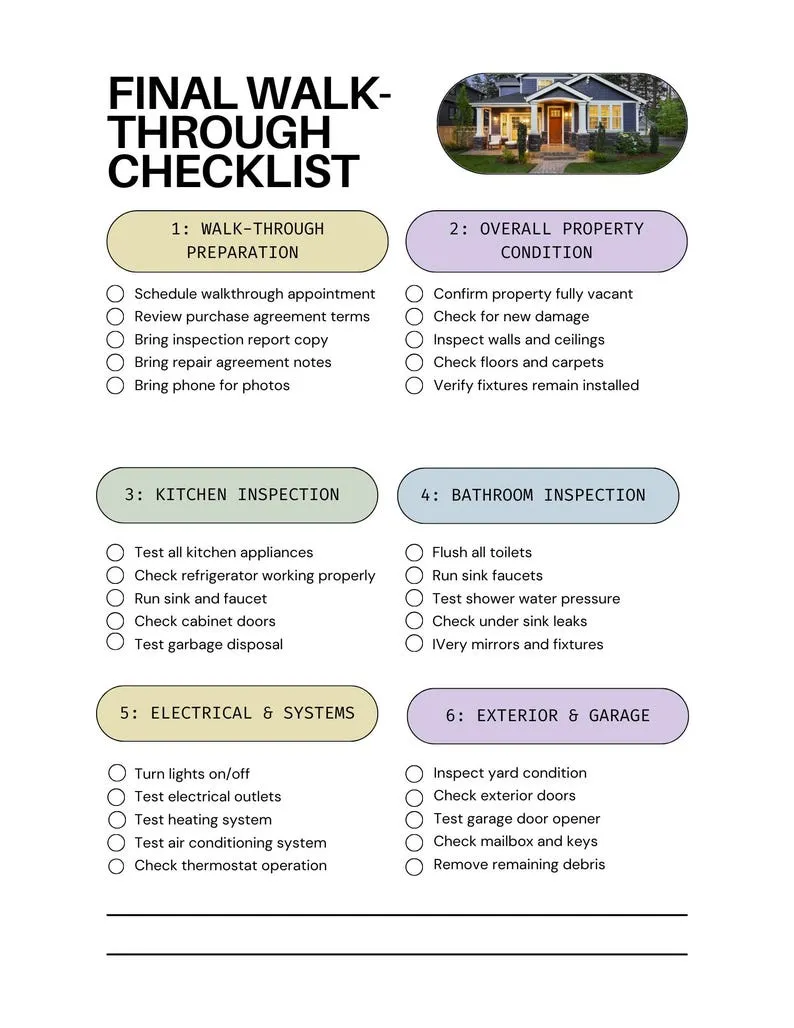
The Walkthrough: Do It the Same Day, Not the Week Before
Most purchase agreements allow a final walkthrough shortly before closing, ideally the morning of or the day before. This is not a second inspection — it is a verification. Are the agreed repairs completed with documentation? Is the home in the contractually required condition? Have the sellers removed all belongings and left the agreed items, such as appliances or window coverings?
If something is wrong, raise it at the closing table before signing. A negotiated holdback — funds withheld in escrow until the issue is resolved — is a standard remedy. Once you sign and record, your leverage drops to zero.
Evening: The Keys, and the Details That Follow
When recording confirms and the title office releases possession, you get the keys — sometimes from the listing agent's office, sometimes via a lockbox code, sometimes handed over at the closing table itself. Ask in advance exactly how the handoff will work so you are not driving across town at five o'clock with a truck full of furniture.
A few final tasks belong on your first-night list: change the exterior door locks, locate the main water shutoff and electrical panel, test smoke detectors, and confirm the utilities are in your name. Mail forwarding, if not already filed, takes a few days to take effect — file it before closing, not after.
The Takeaway
Closing day rewards the prepared and punishes the optimistic. Confirm wire instructions by phone. Read the final numbers before you sign. Understand that funding and recording — not your signature — are what actually hand you the home. Build slack into your moving schedule. None of these steps is difficult, but together they are the difference between sleeping in your new house on closing night and spending that night in a hotel, wondering when recording will post.
Local knowledge helps here, too. Recording practices, possession customs, and even the pace of title offices vary from one county to the next. A local brokerage that closes in your market every week knows exactly how the final day tends to run — and where it tends to stall. That is the kind of quiet, practical advantage that turns a closing date on a calendar into a move-in you can plan around.